

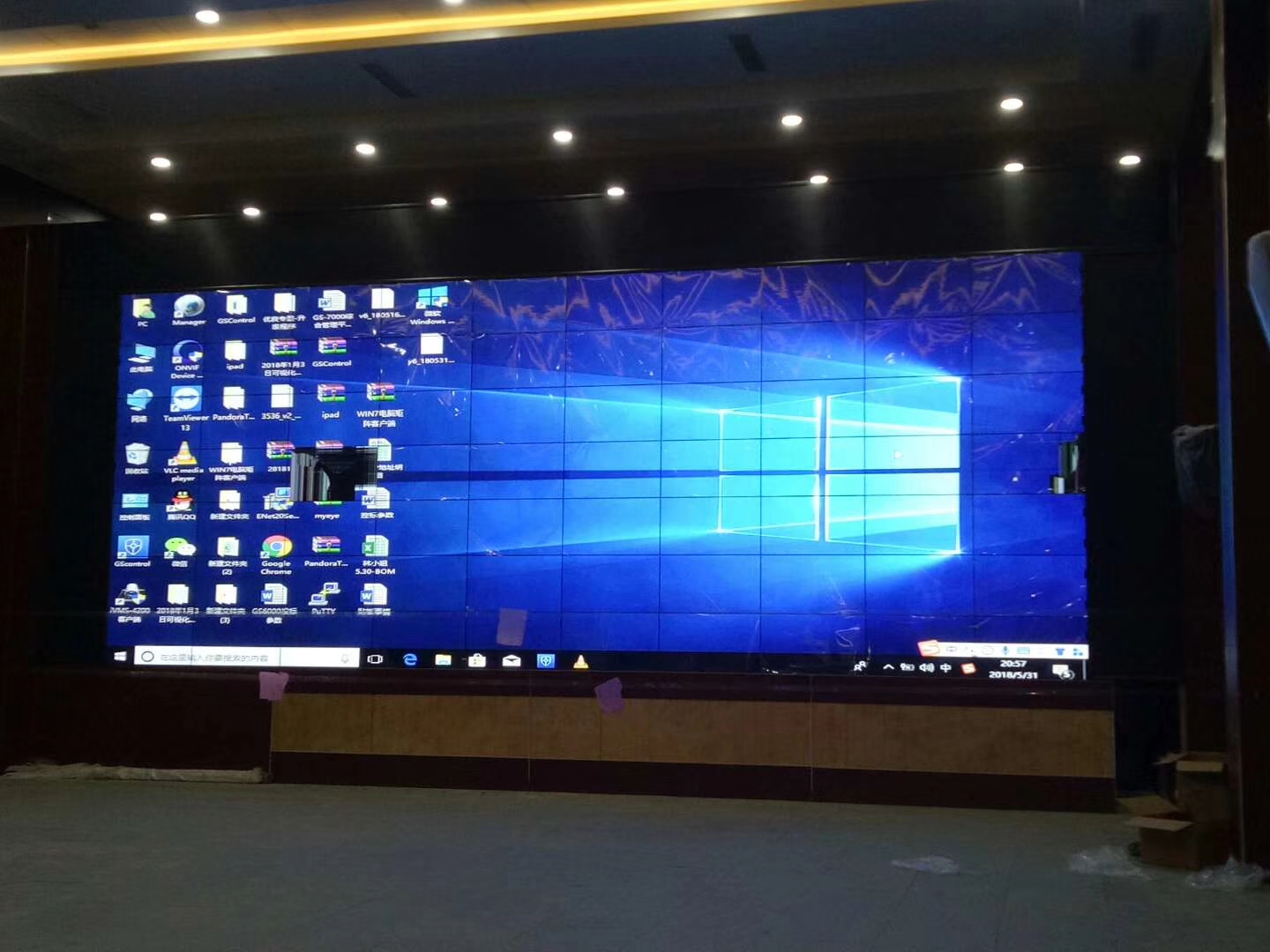
7×10 LCD Video Wall for National Emergency Command Centers
A seventy-panel command wall for large-scale emergency coordination, live intelligence and multi-agency response.
Description
Establish a National-Level Common Operating Picture
Large emergencies rarely remain inside one department or one jurisdiction. A 7×10 LCD video wall for national emergency command centers gives decision makers a shared surface for weather, transport, utilities, public safety, medical capacity and field communications. Seventy panels create enough room to keep strategic indicators visible while operators investigate a specific incident in detail.
The wall can present a countrywide or regional map in the central area, with alert queues, resource status and live feeds arranged around it. This structure helps commanders see both the event and its consequences. Instead of replacing the whole canvas whenever priorities change, teams can enlarge a critical source while preserving the surrounding context needed for coordinated decisions.
Structure Layouts by Command Phase and Agency Ownership
An emergency operation changes from detection to assessment, response, stabilization and recovery. The display layout should change with it. During early assessment, the wall may emphasize incident location, forecasts, incoming calls and verified reports. In active response, it can give more space to evacuation routes, task assignments, hospital capacity, shelter status and public communication.
Clear ownership prevents conflicting updates. Dedicated zones can be assigned to police, fire, medical, transport, utilities and communications teams, while a command zone summarizes decisions that affect everyone. Saved presets allow the control team to move between planned operating modes without rebuilding the canvas during a high-pressure event.
Protect Map Coordinates and Intelligence Detail Across Seventy Panels
A seventy-panel array provides scale, but useful scale depends on disciplined source placement. Fine map labels, camera timestamps, asset identifiers and incident coordinates should remain legible from the normal viewing positions in the room. The processor configuration should preserve source resolution and avoid unnecessary stretching when content crosses panel boundaries.
Before acceptance, the project team should test representative maps, dashboards, spreadsheets and video feeds rather than relying on promotional images alone. Text size, color contrast and alarm priority must be evaluated at operator desks and at the command table. Bezel compensation should also be checked so roads, boundary lines and tracked objects remain visually continuous across the grid.
Integrate Secure Sources and Multi-Agency Access Boundaries
A 7×10 LCD video wall for national emergency command centers may receive content from dispatch platforms, GIS servers, video management systems, broadcast feeds, collaboration tools and secure agency networks. Integration planning should identify each source, its resolution, frame rate, connector, classification and required destination on the wall.
Not every operator should control every source. Role-based access, approved presets and an auditable switching process reduce accidental exposure of restricted information. Sensitive content can remain inside designated display zones or be routed only during authorized sessions. The wall controller should support the operational security policy instead of becoming an uncontrolled bridge between networks.
Design Zoned Infrastructure for Continuity and Maintenance
The size of the array makes service planning essential. Power distribution, signal paths and control hardware should be divided into logical zones so a single fault does not remove the entire operating picture. Clearly labeled cables, documented input assignments and accessible service routes shorten troubleshooting time and reduce disruption during maintenance.
Heat load, ventilation, rack space and front or rear service access should be confirmed before installation. Spare modules and tested recovery procedures should be stored according to the response requirement of the facility. If the project requires redundant processors, power supplies or signal paths, failover behavior must be demonstrated under realistic source loads.
Exercise the Full Emergency Workflow Before Acceptance
A successful factory or site acceptance test should follow real operational scenarios. The team can load normal monitoring presets, introduce a simulated major incident, add agency feeds, enlarge a priority map, publish a command summary and then return to routine monitoring. This reveals whether control steps are fast and understandable when several teams are working at once.
Testing should record source switching time, visual stability, synchronization, alarm readability, preset recall and recovery after an interrupted signal. Operator training should cover daily startup, layout selection, authorized source control and basic fault isolation. These checks turn a large display installation into a dependable decision-support system rather than a collection of screens.
Frequently Asked Questions
How many panels are used in a 7×10 LCD video wall?
A 7×10 configuration uses seventy LCD panels arranged in seven rows and ten columns. The final physical dimensions depend on panel size, bezel width, mounting structure and required service clearance.
Which sources are typically shown during a national emergency?
Common sources include GIS maps, weather and hazard data, dispatch information, traffic and infrastructure status, live video, hospital capacity, shelter availability, resource tracking and verified public-information feeds.
Can different agencies control separate areas of the wall?
Yes. A suitable controller and permission model can assign display zones, presets and source privileges to different teams while reserving a shared command area for cross-agency decisions.
What should be tested before the command wall is accepted?
Test real source resolutions, map and text legibility, preset recall, role permissions, signal recovery, redundancy, synchronization and a complete emergency scenario from initial alert through recovery operations.
Inquiry
You must be logged in to post a review.
Related products
-
3×5 Floor Standing LCD Video Wall for Energy Control Rooms
Why a Floor Cabinet Fits…
-
5×5 LCD Video Wall for City Command Centers
Build a Shared City Picture…
-

2×3 LCD Video Wall System for Control Rooms
Six Panels for Continuous Monitoring…
-
3×4 LCD Video Wall for Emergency Coordination Rooms
Turn Twelve Screens into an…
Reviews
There are no reviews yet.